


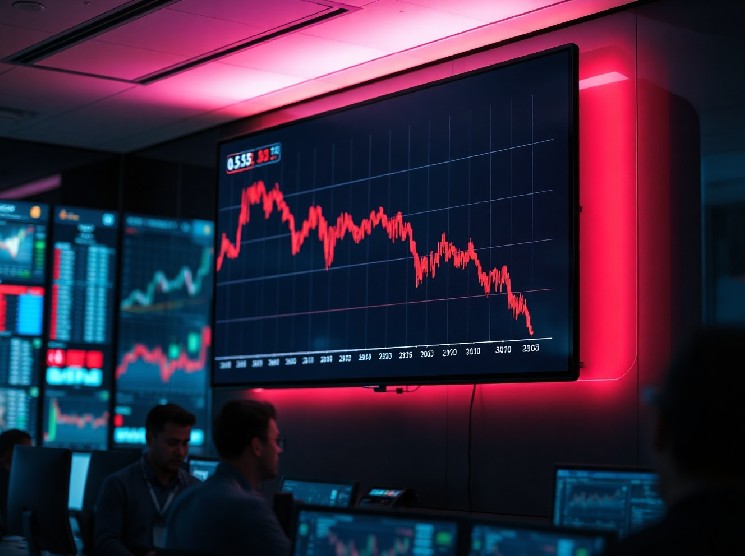
The $LAB token has fallen 99.94% from its all-time high after tokens from its public sale were finally unlocked, according to on-chain analyst ai_9684xtpa. The unlock, which occurred yesterday, has triggered allegations of price manipulation from the crypto community, as early participants saw their paper gains evaporate almost entirely.
Background and Timeline of the $LAB Token Unlock
Participants joined the $LAB public sale in October last year. Within nine months, the token’s price surged 1,120-fold, making early investors appear to hold substantial profits. However, the lock-up period was not lifted as expected. According to ai_9684xtpa, the project unilaterally delayed the unlock date, leaving investors unable to sell their tokens during the peak.
One investor, identified on X as SKYLINE, reported that a $5,000 investment had climbed to $5.6 million in value before the unlock. By the time the tokens were finally delivered, their value had collapsed to $3,219 — a 99.94% drop from the peak. In a post containing the English phrase “560만 달러에서 3,219 달러가 되었다” (from $5.6 million to $3,219), SKYLINE added, “Great rug.”
Market Impact and Community Response
$LAB previously traded as high as $24.4 on Binance perpetual futures, putting its fully diluted valuation at up to $24.4 billion. It now trades at around $0.08543. The dramatic decline has reignited debates about token lock-up practices, transparency in public sales, and the potential for price manipulation in crypto markets.
Community members have accused the project of deliberately delaying the unlock to prevent early investors from selling at the peak, a practice often referred to as a “rug pull” or “exit scam.” The project has not yet issued a public response to these allegations.
Why This Matters for Crypto Investors
This incident highlights the risks associated with investing in early-stage token sales, particularly when lock-up periods are not clearly defined or enforced. Investors should be aware that even projects with strong price momentum can face sudden and severe corrections, especially when unlock schedules are altered.
The $LAB case also underscores the importance of due diligence. Understanding a project’s tokenomics, including lock-up terms and governance mechanisms, is critical before committing funds. The crypto market remains highly volatile, and events like this serve as a reminder that past performance is not indicative of future results.
Conclusion
The $LAB token’s 99.94% crash after a delayed unlock from its public sale has raised serious questions about fair token distribution and market integrity. As the community calls for accountability, this event serves as a cautionary tale for investors navigating the high-risk world of cryptocurrency. The project’s next steps will be closely watched to see if any remedial measures are taken or if regulatory scrutiny follows.
FAQs
Q1: What is the $LAB token?
The $LAB token is a cryptocurrency that was offered in a public sale in October last year. It experienced a massive price surge before crashing after a delayed unlock.
Q2: Why did the token’s price fall so dramatically?
The token fell after tokens from the public sale were finally unlocked, allowing early investors to sell. The price had previously been inflated due to a limited supply and high demand, and the unlock increased selling pressure.
Q3: What are the allegations of price manipulation?
Investors allege that the project unilaterally delayed the unlock date to prevent early participants from selling at the peak, which they claim constitutes a form of price manipulation or a “rug pull.”
Related Reading
- Pump.fun Begins PUMP Token Unlock: 4.94 Billion Tokens Distributed to Team and Investors
- SharpLink to Stake $200 Million in Ethereum Through Lido
- World Liberty Financial Delays Maldives Resort-Linked Token Launch
- Ondo Perps Hits $8B Cumulative Trading Volume, Signaling Growth in RWA-Backed Derivatives
- Ethereum staking hits record 34.7% of total supply as yield compresses
